Hackers Can Run a Cyberattack in Minutes to Steal Your Data
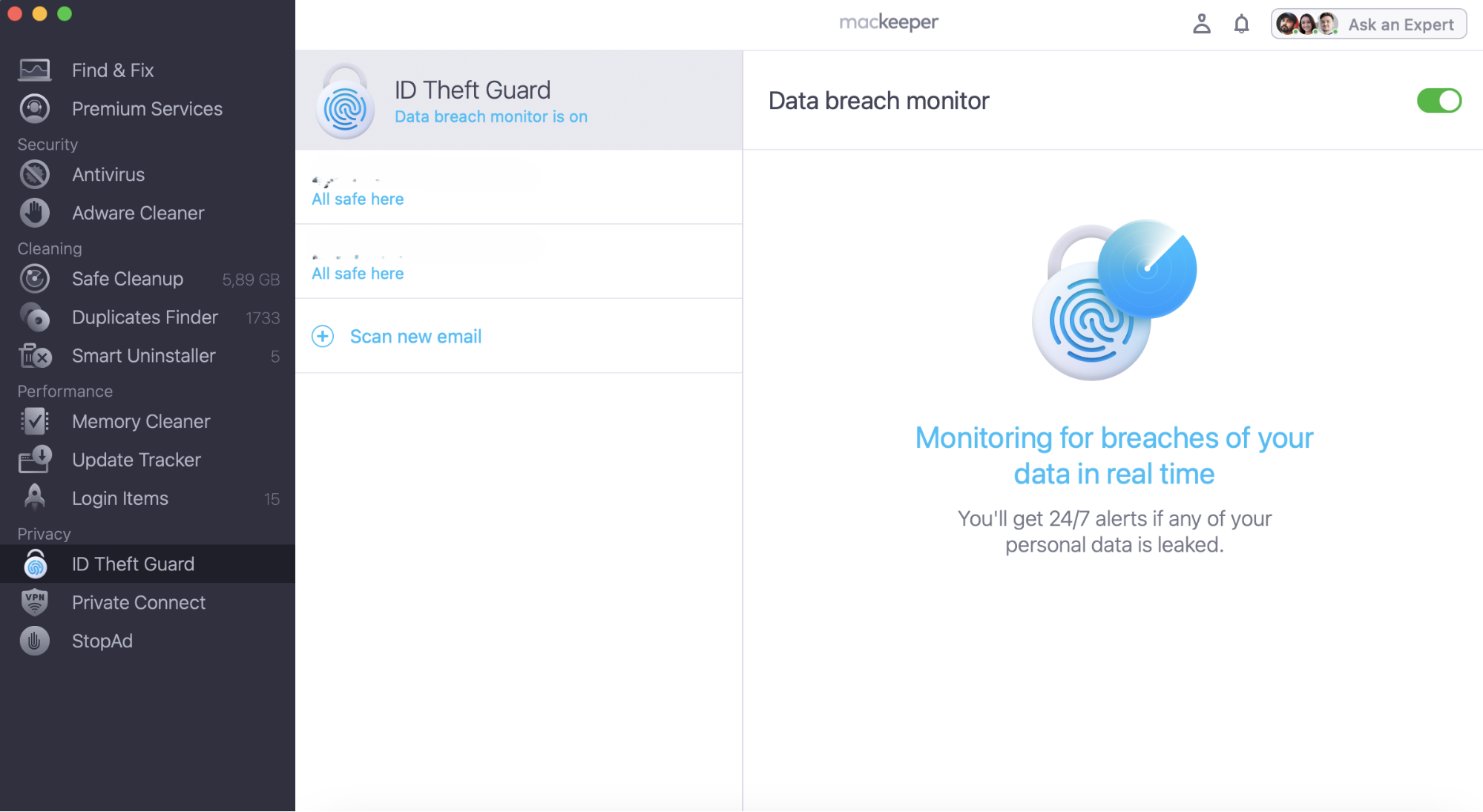
We can imagine those paralyzed faces when Mac users discover hackers can run a cyberattack in minutes to steal their data. The easiest way to stay alarmed is to monitor data leaks 24/7. That’s not difficult with MacKeeper’s ID Theft Guard that will notify you if your private data is compromised.
But, how do hackers work and how can you protect yourself against cyberattacks?
A note from our experts:
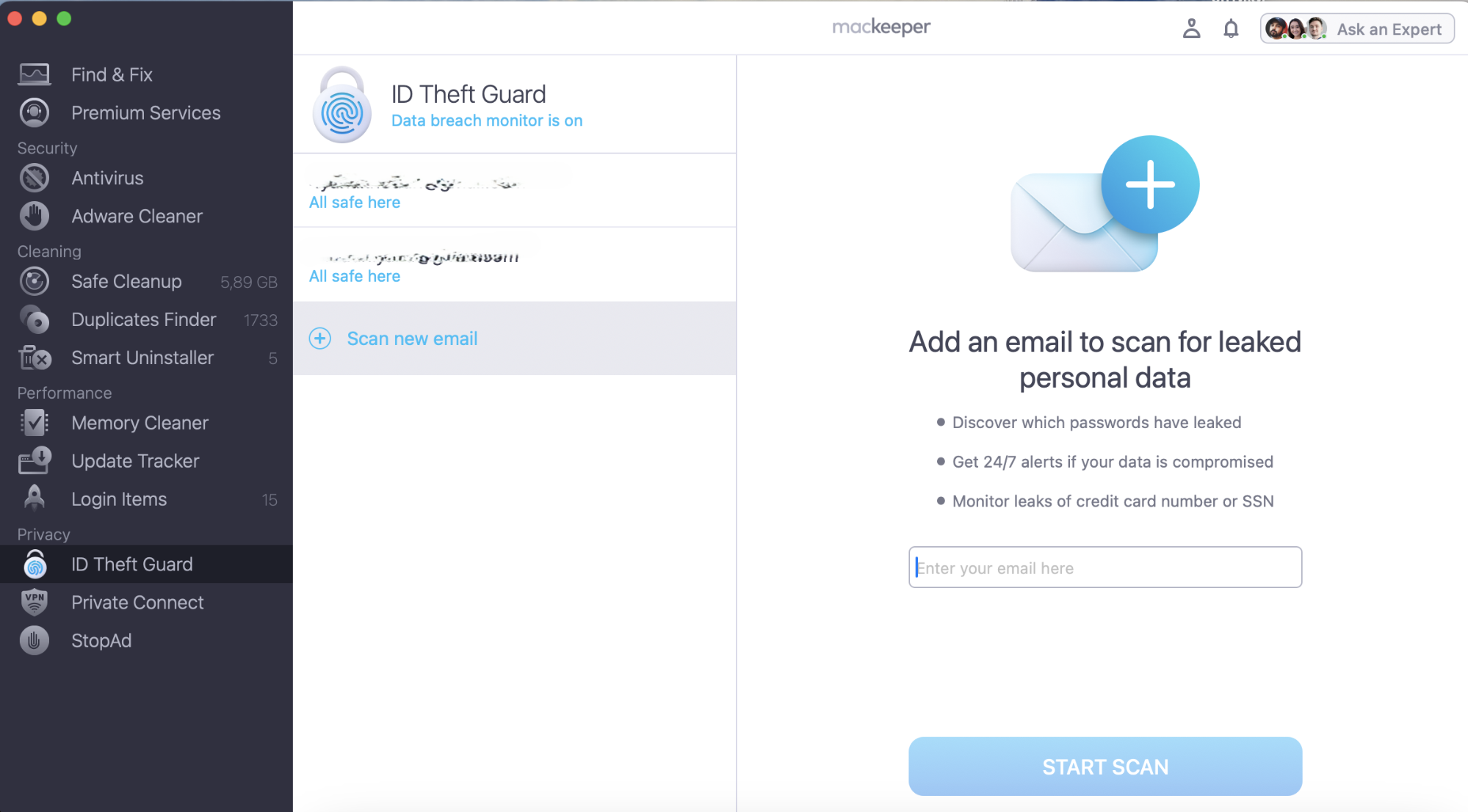
It’s a challenging task to be vigilant all the time. Get MacKeeper and let it take care of your Mac's privacy and security. The ID Theft Guard feature helps you keep your data private. Our tool alerts you in case of data leakage.
Step 1. MacKeeper > ID Theft Guard > Scan new emailStep 2. Enter your email > Star Scan
How long does it take a hacker to perform a cyberattack?
IT security specialists have long studied cyberattacks to understand how to employ protection at each stage of the intrusion. It appears that different types of cyberattacks, from DDoS attacks or malware injection to data theft, have common phases. In 2011, Lockheed Martin summarized the stages of a cyberattack in a model called the Cyber Kill Chain. Later, other security organizations suggested their own models for the attack lifecycle.
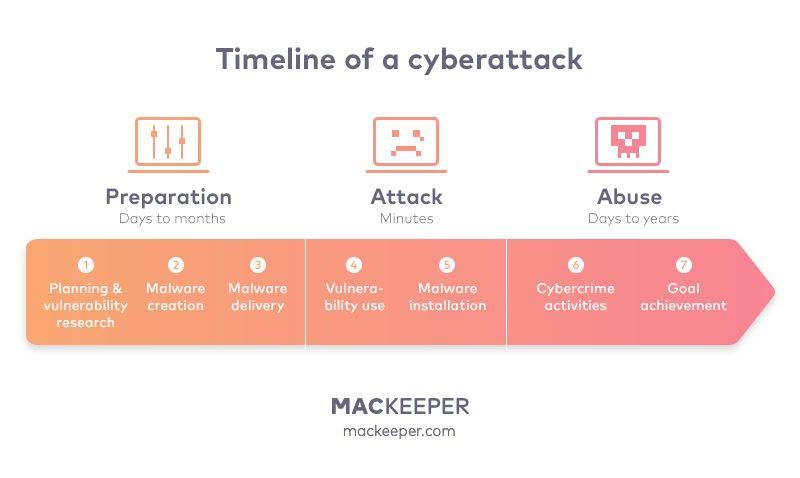
We won’t try to describe all the various schemes used by professionals. Instead, here’s a cyberattack timeline explained in simple words.
So, how long does it take to perform a cyberattack?
1. Hacker preparation for a cyberattack—days to months
This stage is rather time-consuming for the intruders. In order to reach their goal, they have to find a weak spot in their target, think out how they will act, and cover their attack.
For example, hackers may want to use a social engineering path and swindle a corporate login and a password from an employee. For this reason, they’ll research a company’s structure, email addresses, and operational facts. Based on this information, the attacker will be able to impersonate a corporate IT specialist and request employee credentials via a fake email.
Alternatively, cybercriminals may look for software or hardware vulnerabilities, like what happened in the WhatsApp hack story. Often, to find vulnerabilities in applications, web services, or operation systems, hackers use automated tools. For instance, they may use crawlers—programs that work with search engines to find unprotected data stored on the web. Automated vulnerability search tools accelerate attacks significantly.
Next, cybercriminals work on creating their own malicious program or choosing a readily available one to fit their goal best. Eventually, they find a way to deliver the malware to the target—through an email, a legitimate-looking program, a “forgotten” USB key, or in some other way.
2. The cyberattack itself—minutes
Attacking a vulnerability with a proper technical tool, such as malware, lets hackers gain access to the victim and take hold. This process is rapid. It takes mere minutes.
Let’s have a look at some practical figures. A recent study was focused on the speed of action in the main attack phase—a breakout—from the time of initial breach to time of exploring other computers and devices in the network. Russian hackers are the fastest, being able to break out in about 18 minutes on average.
All in all, if an attack is successful, it’s nearly impossible to repel it immediately or fix the harm completely. This is why prevention is key for both security specialists and individuals.
3. Abuse of the invaded resource—days to years
At this stage, the hackers may exploit the target stealthily for as long as needed or until the breach is revealed and fixed.
If the attackers hunt for data, they can use their crawler tool to check the accessed data, identify if it’s encrypted, and dump some of it to see whether it’s what they need. If the data is valuable, the hackers start downloading it.
Data downloading speed depends on the connection capacity of both the hacker and the target. Sometimes, cybercriminals deliberately slow down their activities to continue unnoticed. Experts say that the 143 million customer records stolen in an Equifax data breach were downloaded within a period from one to 38 days.
The picture may differ depending on the type of cyberattack. For example, in a ransomware attack, cybercriminals make their invasion visible right away. They block access to a computer system and threaten to delete all the data stored inside unless a ransom is paid. In this case, the adversaries often set a short deadline to compel the victim to act.
How we set bait for hackers and tested their speed
One of the most common problems that companies experience happens when they place unprotected databases online. Usually, due to human error, large storages of sensitive data appear searchable and accessible to hackers. The result may be catastrophic as billions of records can be leaked in a data breach.
Interestingly, it’s quite easy to simulate an unprotected database and see how attackers would react. Professionals call these fake databases “honeypots” as they are irresistibly attractive to cybercrooks.
Curious about checking all security-related questions in practice, we couldn’t resist creating our own honeypot. We created a fake open database and placed it online. It was a MongoDB database, like those commonly used by different organizations. In just 10 days, our bait was found and attacked. The entire compromise took only 13 seconds to be completed.
Using automated tools, hackers found our database, connected to it, simulated data theft, and left a ransom note. They demanded 0.2 bitcoin for information recovery. In fact, we could see that our fabricated database was in fact deleted, not stolen, so the deal was even more sinister. We also checked whether these attackers received ransom payments from other victims but luckily they hadn’t.
What we learnt from this experiment is that unprotected databases are easily found by cybercriminals and are rapidly intercepted. For a business, this means that careless treatment of data will inevitably bring trouble.
How long does password cracking take?
Just like businesses, users have to take care of their data. Otherwise, they’ll likely be hacked quickly and irreversibly.
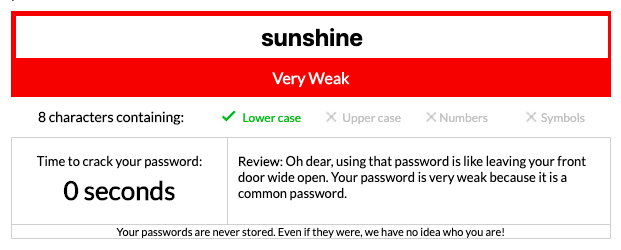
The easiest and most obvious way to protect yourself online is to use strong and unique passwords on your accounts. By the way, it’s now possible to automatically check how quickly a certain password can be hacked.
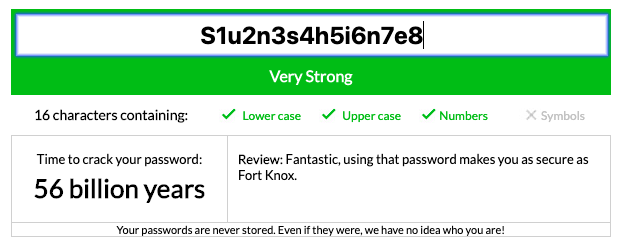
Now, what if we just add numbers after each letter? The word gets twice longer and no one would find it in a dictionary. It would take a password cracker 56 billion years to hack this password.
At MacKeeper, we want to make security control easy and seamless for you. ID Theft Guard, a new tool within MacKeeper regularly checks any accounts linked to an email you provide. If your data is ever compromised and made public online, you’ll get immediate alerts. This way, you will be able to act quickly and protect yourself from further troubles. Give it a try and see how convenient it is!
We respect your privacy and
use cookies
for the best site experience.
Privacy Preferences Center
We use cookies along with other tools to give you the best possible experience while using the
MacKeeper website. Cookies are small text files that help the website load faster. The cookies we
use don’t contain any type of personal data meaning they never store information such as your
location, email address, or IP address.
Help us improve how you interact with our website by accepting the use of cookies. You can change
your privacy settings whenever you like.
Manage consent
All cookies
These cookies are strictly necessary for enabling basic website functionality (including page
navigation, form submission, language detection, post commenting), downloading and purchasing
software. The website might malfunction without these cookies.